
Estrogen and Your EARS
If you have find yourself nodding, smiling and saying, “How nice!” when someone tells you their mother died, you are not alone.

In my Inside Info podcast this week, my guest, Dr. Makeba Williams and I, discuss esoteric symptoms of menopause. One of the many topics we touch on is the connection between estrogen and hearing loss- a topic that is almost never discussed but that impacts millions of women.
By the mid-sixties, 1 in 4 women are turning up the volume on the TV and having difficulty hearing in crowded settings. It doesn’t help that most restaurants are so noisy that having a conversation requires sign language.
Here’s the headline: Aging, exposure to excessive noise and exposure to certain drugs impact hearing. But, so does menopause.
Before I explain the connection of estrogen to hearing, (and with apologies to my audiologist), here’s a brief explanation of how sound gets transmitted to the brain:
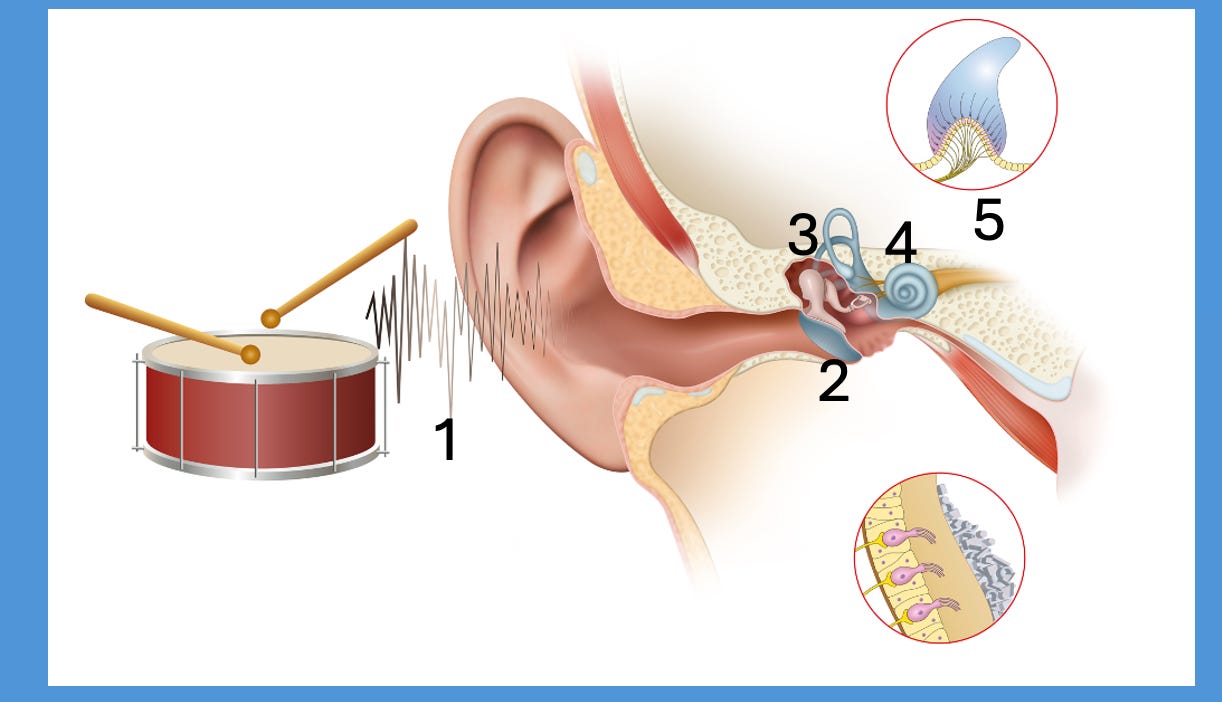
1. Sound waves enter the ear canal
2. When the sound hits the eardrum (tympanic membrane), the eardrum vibrates
3. Those vibrations travel to the ossicles, 3 small bones in the inner ear
4. The vibrations reach the cochlea, a spiral cavity lined with rows of hair cells (cilia)
5. The hair cells are sensory receptors. Vibration makes the cilia move back and forth which open electrical channels that convert vibrations to electrical signals (messages) which travel down the auditory nerve, to the brain.
If the cochlear hair cells are damaged or destroyed from aging or other factors, they no longer are functional, and they cannot regrow.
The Estrogen Connection
You will find some version of the above explanation on every website that describes how we hear. But the part that is never included is that estrogen not only impacts auditory function, but is produced in the ear!
The reason auditory function is influenced by estrogen is that hormone receptors in the cochlea protect the hair cells from inflammation and injury. Throughout life, a high level of naturally made estrogen is associated with a better hearing function. During the reproductive years, women hear differently than men, and in many ways, better than men. And then menopause hits…
Hearing Loss in Post Menopause Women
There is a well established association between serum estradiol levels and damage to cochlear hair cells which explains why post menopause women are the most likely demographic to have sensorineural hearing loss. To be fair, estrogen is just one culprit. Aging, a lifetime of loud noise and many medications also damage inner ear auditory function.But, men also have hearing loss due to environmental and drug exposures, and there is still a well documented auditory gap between men and women. So not only is there an orgasm gap that favors men, but there is also an auditory gap. So unfair.
Hormone Therapy and Hearing
One would think that if estrogen is responsible for protecting and enhancing hearing in young women, that post menopause hormone therapy would decrease hearing loss.
In some studies, MHT improved hearing, in others there was no impact or hormone therapy made it worse. The results are all over the map. The variability appears at least partially dependent on dosage and age at which hormone therapy was started. Which makes sense. It’s logical that if estrogen is started early, before there is irreversible damage to cochlear hair cells, it might be protective.
The physiology of how estrogen protects hearing is really complicated, and best understood by auditory experts (which I am NOT!). and if you are curious and want to know more, check my references at the bottom. But, in my reading , one thing persistently was mentioned. Inflammation negatively impacts auditory function. Estrogen has known anti-inflammatory, and has neuroprotective properties in the inner ear.
The other factor at play is progesterone. Evidently, and corroborated in animal studies, while estrogen generally helps, progesterone can negatively impact hearing thresholds in humans and mice.
I have lots of questions, but not many answers:
Since hearing loss start to deteriorate in the 30s, are birth control pills during perimenopause protective? It’s been studied, but results are mixed.
Is the greatest benefit in women who start HT during late perimenopause? No idea.
Will hearing loss be accelerated if hormone therapy is stopped? No data
Is there a correlation with moderate to severe vasomotor symptoms and hearing loss due to increased inflammation? Never studied.
Will estrogen laced eardrops help? Just a thought.
The Impact of Hearing Loss
The impact of hearing loss in women goes well beyond frustration and inconvenience.
Severe hearing loss is associated with
A 5-fold increase in DEMENTIA
SOCIAL ISOLATION, which in turn further contributes to dementia risk
Increased risk of FALLS due to loss of subtle auditory cures that help with balance.
And in case you need extra incentive for wearing hearing aids, hearing impairment correlates with sexual dysfunction. I assume the reason for sexual dysfunction is tied to social isolation as opposed to the inability to hear your partner say “lick more to the right,” but to my knowledge, it’s never been studied,.
Hearing Aids!
The silver lining in this dark cloud is that hearing aids are game changers. The 2023 ACHIEVE study, a randomized controlled trial of adults (about half were women) between the ages of 70 and 84 with untreated hearing loss was designed to study the impact of hearing aids. There was 48% decline in the rate of cognitive decline in older adults at high risk for dementia. There was an important caveat to these impressive results- the decline was only seen in high risk people, not for healthy volunteers.
The ACHIEVE study also demonstrated reduced social isolation, less loneliness and a reduction in falls in folks with hearing aids compared to those that did not use hearing aids. Sadly, they neglected to study sexual function.
Many other studies, have also demonstrated that hearing aides are associated with both short term and long term cognitive improvement along with benefits in mental health and social parameters.
Hearing Aids – A New Fashion Statement?
Eyeglasses are not only an accepted rite of passage into middle age, but accepted fashion statements incentivizing women to own multiple pairs. Some folks wear glasses (with clear lenses) that don’t need them- just because they look cool, or enhance credibility.
Hearing aids, on the other hand, still have the unfortunate status of something that really old people need. It’s the rare fashion influencer/ celebrity icon that flaunts their hearing aids. If the Kardashions all started wearing hearing aids, it might make up for all of the horrible fashion trends they have perpetrated through the years. Just saying.
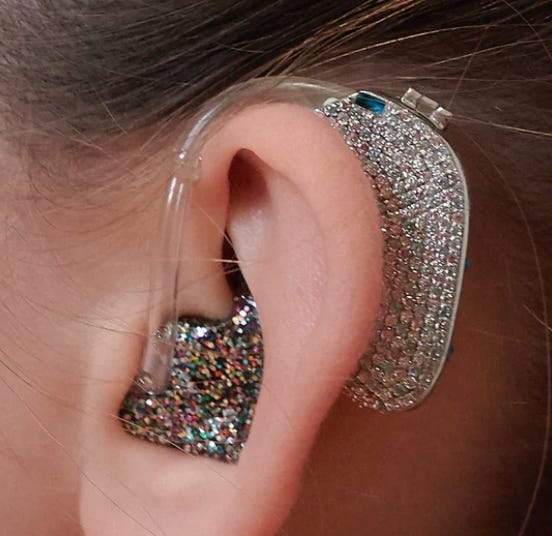
When researching this article, I came across AUZI, a company that encourages hearing aids as fashion statement with beautiful jeweled hearing aid covers. Their styles are mostly sold out (which is just as well since they are pretty pricey) but they may inspire you to bejewel your own aids. Or just head to Etsy where you will find thousands of ways to make a hearing aid fashion statement.
For those that don’t want to flaunt diamond crusted hearing aids, there are many options for in canal or barely visible styles.
And while it may sometimes be tempting to do so, you now have no excuse for tuning out those around you.
References
Thank you for this information ... I can't say I'd've ever made a connection between estrogen and hearing loss, so it was enlightening. Or, to put it more appropriately: "I hear ya!" :)
Thanks for covering this, Dr. Streicher! Also, I love that sparkly hearing aid. — Amy Cuevas Schroeder